Dīpa Prayāṇam and Arayāl Pratiṣṭhā
From January 18 to February 3, 2026, the Mahā Māgha Mahotsavam—known as Kerala’s Kumbha Mela—will be held at Tirunavaya in Malappuram district.
The ācāryas have systematized observances such as the Kumbha Mela, Kalpavāsa, Puṣkara Utsavam, and Māgha Mahotsavam in order to effectively harness, for the nation and for individuals, the extraordinary energy transmissions that occur in nature during certain special periods.
The Mahā Māgha Mahotsavam, which had been discontinued 250 years ago, is returning this time with the same ancient dharmic grandeur.
On the morning of January 19, a chariot procession carrying the Mahā Meru—after the performance of Śrīcakra Pūjā—will begin from the foothills of Tirumūrtimalai near Udumalpet in Tamil Nadu.
When this Mahā Meru reaches Tirunavaya on January 22, a kedāvilakku (perpetual lamp) will be lit beside it.
Lamp processions led in groups from all temples, family temples, and sacred groves (kāvu) across Kerala will arrive at Tirunavaya, and through this lamp, the divine lamp-energy and deity-consciousness of the respective regions will be merged into the kedāvilakku.
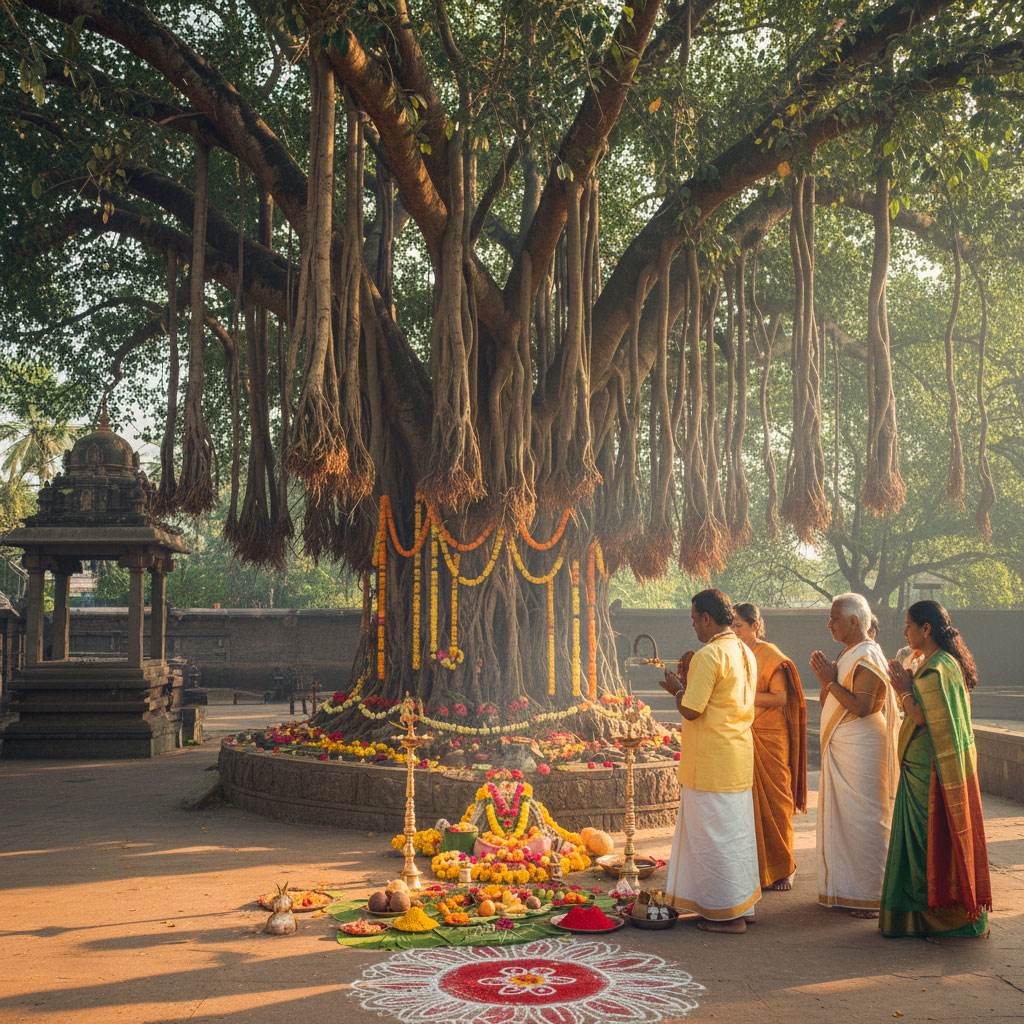
After this, it has been decided collectively that the groups returning to their native places will plant and nurture a banyan sapling (ālin thai) in their own regions.
The first water to be poured on this banyan sapling shall be the sacred water from the Bhāratappuzha, which is filled with energy during the month of Māgha.
With the understanding that the growth and prosperity of this banyan tree symbolize the welfare of our land, the groups are to protect and care for this banyan tree.
That is:
– The deity-consciousness of each region is brought to Tirunavaya through the lamp.
– Sacred water from the Bhāratappuzha is taken back along with a banyan sapling.
– The consciousness of all deities is carried back to the respective regions.
Through sacred baths,
through sacred trees,
through sacred deeds,
we can strengthen society.